
How to Grow Oriental Mustard Microgreens in 7 Days (Even If You've Never Planted a Thing)
- Oriental Mustard Microgreens are ready to harvest in just 7 days and grow right on your countertop — no garden or experience required.
- Connor Hiebel's cinnamon trick is a natural antifungal that prevents mold before it ever starts — a game-changer for beginners.
- Water pH (6.5–7.5) and switching to bottom-watering after Day 3 are the two most critical factors for a healthy, mold-free crop.
- The Island Microgreens Starter Kit includes everything you need — seeds, trays, grow medium, and a QR code linked to step-by-step growing videos.
In a world where health trends change by the hour and store-bought produce feels less and less alive, something magical happens when you grow your own food — especially when it happens in just 7 days. If you've ever thought "I don't have a green thumb" or "I don't have the space or time," this guide is about to prove you wrong in the best way possible.
Meet Connor Hiebel, founder of Island Microgreens, based in Amelia Island, Florida. Connor has been growing microgreens for 14 years — since he was seven years old — and his mission is simple: help people grow their own health, one tray of vibrant greens at a time. In this guide, he walks you through his exact method for growing Oriental Mustard Microgreens from seed to harvest, including a little-known cinnamon trick that could save your entire crop from mold.
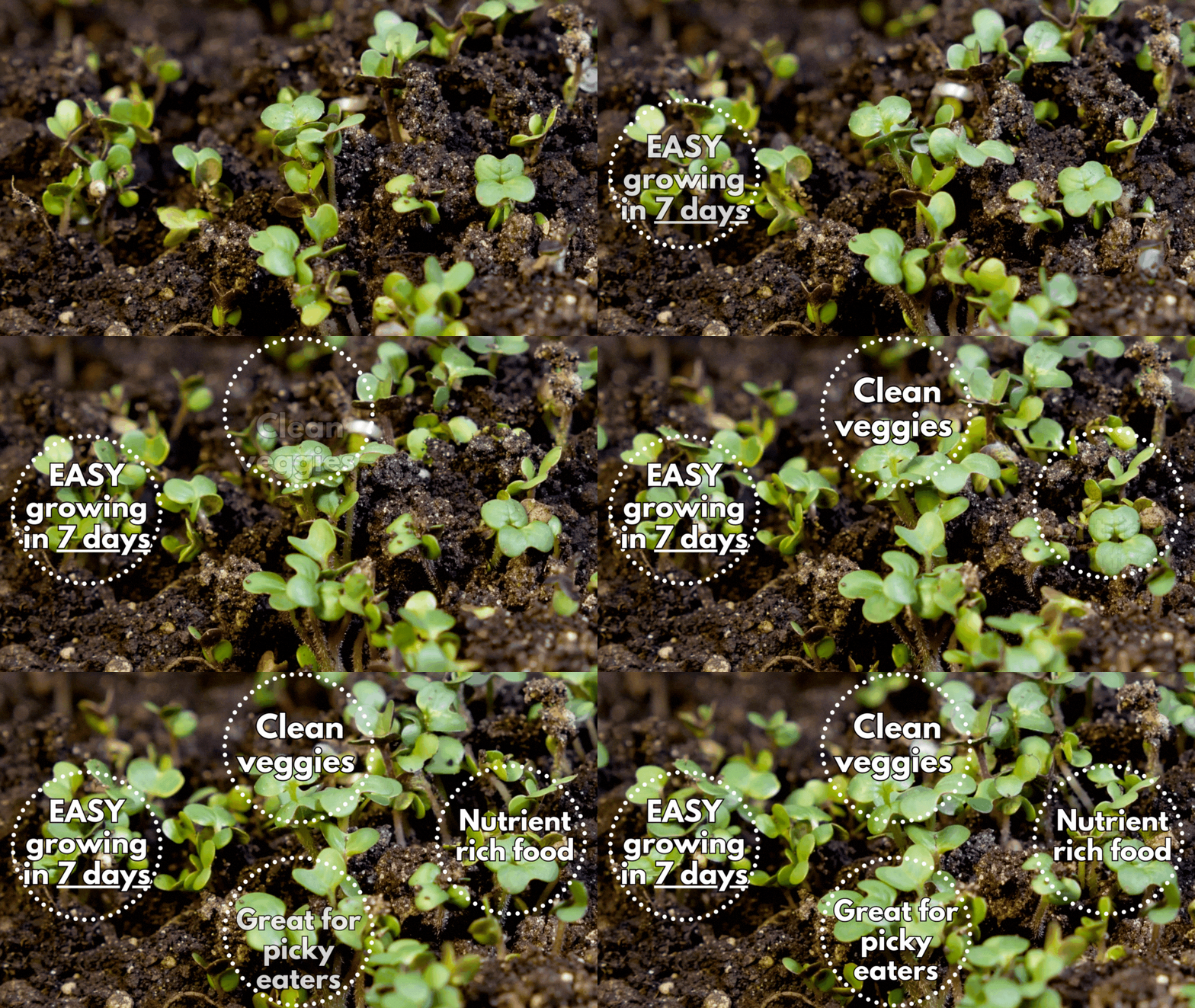
🎥 Watch: Grow Oriental Mustard Microgreens Step-by-Step
▶ Follow Connor's exact 7-day method — and don't miss the mold-busting secret at the end
Why Oriental Mustard Microgreens Are Worth Growing
Oriental Mustard Microgreens have a bold, peppery flavor that adds a serious kick to sandwiches, salads, wraps, and grain bowls. But beyond taste, they are nutritional powerhouses — packed with vitamins A, C, E, and K, along with glucosinolates, the compounds associated with cancer-fighting properties in cruciferous vegetables. And because you're harvesting them at the cotyledon stage, you're getting the most concentrated version of those nutrients possible.
They're also one of the most beginner-friendly varieties you can grow. They germinate quickly, grow vigorously, and are forgiving enough that even a first-time grower can get a beautiful, harvestable tray in a single week. If you've been on the fence about starting, Oriental Mustard is the variety to begin with.
Step 1: Kit vs. DIY — What You Actually Need
Before you plant a single seed, you need to decide whether to build your own setup from scratch or use a curated grow kit. Connor breaks this down clearly, and the answer depends on where you are in your growing journey.
The Case for a Grow Kit
- Pre-measured, high-quality seeds — no guesswork on quantities
- Includes everything: trays, grow medium, pH strip, and instructions
- QR code linked to growing videos for each seed type
- Ideal for first-time growers who want fast, reliable results
The Case for DIY
- Lower cost per tray over the long term once you know what you're doing
- Requires bulk seed buying, seed calculators, and sourcing individual supplies
- Not beginner-friendly — extra prep work can lead to mistakes that kill your first crop
For your first tray, use the Island Microgreens Grow Kit. It removes every variable that causes beginners to fail — the wrong seed density, the wrong medium, the wrong tray depth — and replaces them with a system that Connor has refined over 14 years.
Step 2: Water, Soil & the pH Secret
Water quality is one of the most overlooked factors in microgreen growing — and one of the most important. Tap water in many areas contains chlorine, fluoride, and other additives that can inhibit germination and stress young seedlings. Connor recommends using filtered water whenever possible, and always checking the pH before watering.
The ideal pH range for microgreens is 6.5 to 7.5. Water that is too acidic or too alkaline will affect nutrient uptake and can cause yellowing, slow growth, or root problems. If your water is off, you can adjust it easily: a few drops of lemon juice will lower pH, while a pinch of baking soda will raise it. A simple pH strip included in the Island Microgreens kit makes this a 10-second check.
Preparing the Coco Coir
Connor's preferred growing medium is Coco Coir — a sterilized, compressed coconut husk that expands dramatically when hydrated with warm water. It's lightweight, holds moisture without becoming waterlogged, and is naturally resistant to mold. Add warm water to the compressed block and watch it expand like a sponge coming to life. Once fully hydrated and fluffed, it's ready to fill your tray.
Use warm (not hot) water to hydrate your Coco Coir. Warm water speeds up the expansion process and ensures the medium is evenly moist throughout — not wet on the outside and dry in the center.
Ready to Grow Your First Tray?
Get the Island Microgreens Starter Kit — everything included, just add water.
Step 3: Seeding, Light & the Cinnamon Trick
Once your tray is filled with moist Coco Coir, it's time to spread your Oriental Mustard seeds. This step is more technique-sensitive than most beginners expect — and it's where many first-time growers accidentally set themselves up for mold problems.
How to Spread Seeds Evenly
The goal is a single, even layer of seeds across the entire surface of the growing medium — no clumps, no bare patches. Clumped seeds create dense, humid pockets where mold thrives. Connor demonstrates his hand technique in the video: using a gentle pinching and sweeping motion to distribute seeds uniformly from edge to edge. Take your time with this step. It takes about 60 seconds and makes a significant difference in your final harvest.
The Cinnamon Trick That Changes Everything
Here is Connor's most-shared tip, and the one that beginners consistently say saved their first crop: after spreading your seeds, lightly dust the surface with ground cinnamon. Cinnamon is a natural antifungal agent. Applied at seeding, it creates an inhospitable environment for mold spores without harming your seeds or seedlings in any way. It's inexpensive, food-safe, and remarkably effective — especially in humid climates like Amelia Island, Florida.
Light: You Don't Need Grow Lights
One of the most common misconceptions about growing microgreens is that you need expensive grow lights. You don't. A bright windowsill with indirect natural light is all Oriental Mustard Microgreens require. Because microgreens grow toward the light source, simply rotate your tray 180 degrees each day to encourage straight, even growth. If your window gets strong direct sun for part of the day, that's fine — just make sure the tray doesn't dry out too quickly.
Days 1–7: Germination, Watering & Harvest
Days 1–3: The Blackout Phase
After seeding, cover your tray with a second tray or a piece of foil to create a humidity dome. This blackout period mimics the conditions of seeds germinating underground and dramatically speeds up germination. Mist the seeds lightly from above once on Day 1, then leave them covered. Check on Day 2 — if the medium feels dry, mist lightly again. By Day 3, you should see the first white sprouts pushing through the surface.
Days 3–4: Uncover and Move to Light
Once your sprouts are about an inch tall and the seed hulls are beginning to lift, remove the cover and move the tray to your bright windowsill. From this point forward, stop misting from above. Top-watering at this stage increases the risk of mold on the leaves and stems. Instead, switch to bottom-watering: pour about a cup of pH-balanced water into the bottom tray and allow the growing medium to absorb it from below.
Days 4–7: Bottom Watering and the Final Push
Check the bottom tray daily. If the water has been fully absorbed, add another cup. If there is still standing water, wait until it's absorbed before adding more — standing water is one of the leading causes of root rot in microgreens. By Day 5 or 6, your Oriental Mustard Microgreens will be visibly growing fast, with true leaves beginning to emerge. On Day 7, they're ready to harvest.
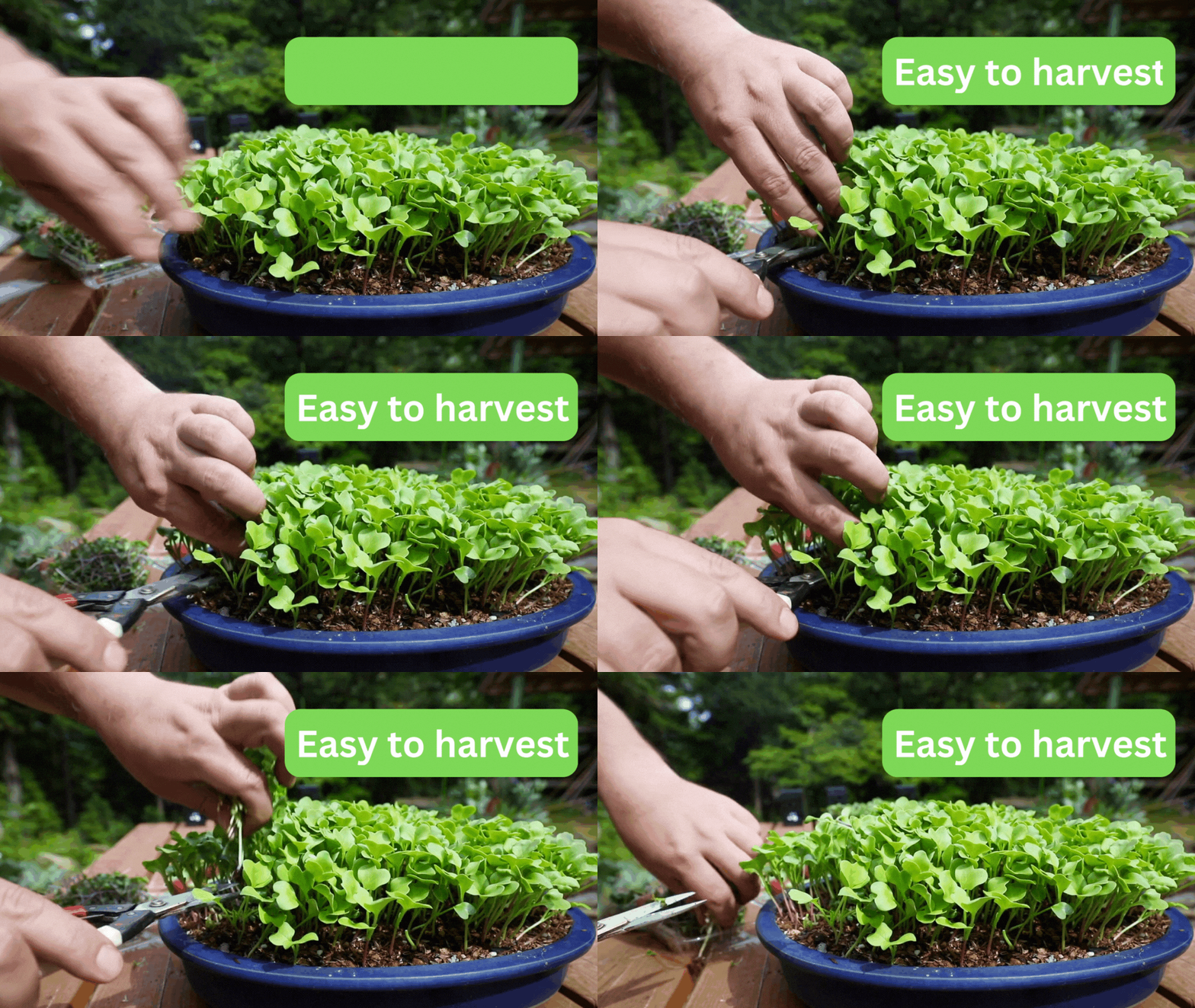
Harvest only what you need each day. Use clean scissors or a sharp knife to cut just above the soil line. Leave the rest in the tray — your microgreens will stay fresh and continue to be harvestable for up to 14 days after the first cut. Don't throw away the root mat when you're done: compost it, or offer it to a neighbor with backyard chickens.
Growing Oriental Mustard Microgreens at home isn't just a trend — it's a return to simplicity, health, and empowerment. Connor Hiebel's approach makes it doable for literally anyone, even if you've never planted a thing. His easy-to-follow system has helped thousands of families grow fresh greens on their windowsill in less than a week — and you can too. So grab your kit, hit play on the video, and start growing your own health, one tray at a time.
Frequently Asked Questions
How long does it take to grow Oriental Mustard Microgreens?
Oriental Mustard Microgreens are typically ready to harvest in 7 days from seeding. They are one of the faster-growing microgreen varieties, with visible germination by Day 2 or 3 and full cotyledon development by Day 6 to 7. Factors like temperature, light, and water quality can slightly affect timing, but most growers achieve a harvestable tray within the 7-day window.
What is the cinnamon trick for preventing mold in microgreens?
The cinnamon trick involves lightly dusting ground cinnamon over the surface of your seeds immediately after spreading them in the growing tray. Cinnamon contains cinnamaldehyde, a natural compound with antifungal properties that inhibits mold spore growth on the surface of the growing medium. It is food-safe, inexpensive, and does not harm seeds or seedlings. It is especially effective in humid environments where mold is a common challenge for beginners.
What water pH is best for growing microgreens?
The ideal water pH for growing microgreens is between 6.5 and 7.5. Water that is too acidic (below 6.0) or too alkaline (above 8.0) can interfere with nutrient uptake, slow germination, and cause yellowing or stunted growth. You can test your water with a simple pH strip and adjust it using a few drops of lemon juice to lower pH or a small pinch of baking soda to raise it.
Do I need grow lights to grow microgreens at home?
No. Most microgreen varieties, including Oriental Mustard, grow perfectly well under natural indirect light from a bright windowsill. Grow lights are only necessary if you have no access to natural light or are growing at a commercial scale. If using a window, rotate your tray 180 degrees each day to encourage straight, even growth as the seedlings lean toward the light source.
What is the difference between bottom watering and top watering for microgreens?
Top watering means applying water directly to the surface of the growing medium from above, typically using a spray bottle or watering can. Bottom watering means pouring water into the tray beneath the growing tray and allowing the growing medium to absorb moisture upward through capillary action. Top watering is used during the first 1 to 3 days to keep seeds moist during germination. After Day 3, switching to bottom watering reduces the risk of mold on leaves and stems and encourages deeper root development.
How long do harvested microgreens stay fresh?
Microgreens stored in an airtight container in the refrigerator will typically stay fresh for 5 to 7 days after cutting. However, if you harvest directly from a living tray — cutting only what you need each day and leaving the rest growing — your microgreens can remain harvestable for up to 14 days from the first cut. This harvest-as-you-go method is the most efficient way to minimize waste and maximize freshness.
What is the easiest microgreen kit for beginners?
The Island Microgreens Starter Kit, curated by Connor Hiebel, is specifically designed for first-time growers. It includes pre-measured high-quality seeds, a two-tier growing tray system, Coco Coir growing medium, a pH strip, and a QR code linked to step-by-step video tutorials for each seed variety. Everything is included in one package, so you can skip the guesswork and get to the rewarding part — harvesting your first tray — in just 7 days.

Start Growing in 7 Days — Guaranteed
Join thousands of happy growers. Our foolproof kit gives you 40x more nutrients than store-bought greens, right from your kitchen counter — no yard, no experience needed.
🌿 Get Your Grow Kit Get the FREE Masterclass


0 comments